Acoustic Mastery: The Luxury of Silence in 2026 Design
A Sarah Z Designs Executive Technical Report
The Sarah Z Philosophy: The Invisible Architecture of Quiet
At Sarah Z Designs, acoustic luxury interior design in Miami defines our approach to creating spaces where silence is the ultimate luxury.
In the vibrant pulse of Miami, from the bustling streets of Brickell to the crashing waves of South Beach, true luxury is increasingly defined by what you do not hear. Silence is not merely the absence of noise; it is a carefully curated architectural element that defines the soul of a sanctuary. As part of our 2026 Miami Interior Design Trends, we treat acoustic mastery as the invisible thread that weaves comfort into the grandest of interiors, ensuring that your home remains a peaceful retreat amidst the city’s dynamic energy. In my design philosophy, I believe that a visually stunning space must also sound beautiful.
The Science of Silence in High-End Interiors
Designing for the ear is just as critical as designing for the eye. When I walk into a raw penthouse shell, I immediately listen to how the space holds sound. The vast expanses of glass and concrete typical of Miami architecture can create a cacophony of echoes if not managed with precision. This is especially vital in spaces designed for high performance, such as we explored in our guide on Cognitive Ergonomics, where silence is the fuel for executive focus.
To achieve auditory bliss, we must understand the metrics. The Noise Reduction Coefficient (NRC) measures how much sound a material absorbs. In my studio, we prioritize materials with high NRC ratings for open-concept living areas. It is not about covering every surface, but strategically placing absorption points that capture reverberation without stifling the room’s energy. While NRC handles the sound within a room, Sound Transmission Class (STC) dictates how sound travels between rooms. For a master suite that demands absolute privacy—a key component of our Digital Sanctuary philosophy—we focus on wall assemblies with high STC ratings.
Advanced Engineering: Beyond Surface Absorption
The evolution of acoustic design in 2026 moves beyond simple soft surfaces into the realm of metamaterials and structural decoupling. In high-end Miami residences, vibration is often as intrusive as airborne noise. Sub-bass frequencies from nearby nightlife or mechanical hums from building HVAC systems require a multi-layered approach. We utilize “green glue” damping compounds and resilient channels behind drywall to decouple the living space from the building’s skeleton, effectively killing vibration before it reaches the ear.
Furthermore, we are now implementing Geometric Diffusion. In rooms with double-height ceilings, absorption alone can make a space feel “dead” or oppressive. By using custom-milled wooden diffusers—which look like avant-garde wall art—we scatter sound waves in multiple directions. This maintains the “liveliness” of the room, perfect for hosting social gatherings, while eliminating the harsh metallic echoes typical of modern minimalist architecture.
The Psychology of Soundscapes
Acoustic mastery also involves the intentional introduction of “Positive Sound.” In the same way we use Biophilic Pigments to calm the eyes, we use biophilic soundscapes to calm the mind. We integrate hidden, high-fidelity transducers within the walls (Invisible Speakers) that can emit low-frequency pink noise or natural water sounds. This provides a “sonic veil” that masks intrusive city noises without the resident ever seeing a speaker.
This haptic-acoustic synergy is essential for total sensory immersion. When a client walks across a room, the “thud” of their footstep should feel solid and grounded, not hollow. This is achieved by layering specialized acoustic underlayments beneath stone or hardwood floors, ensuring that every movement within the home reinforces a sense of permanence and quality.
Curating Materials for Auditory Comfort
Soundproofing need not look industrial; in fact, the most effective acoustic solutions are often the most luxurious. I treat sound absorption as an opportunity to introduce rich textures and depth.
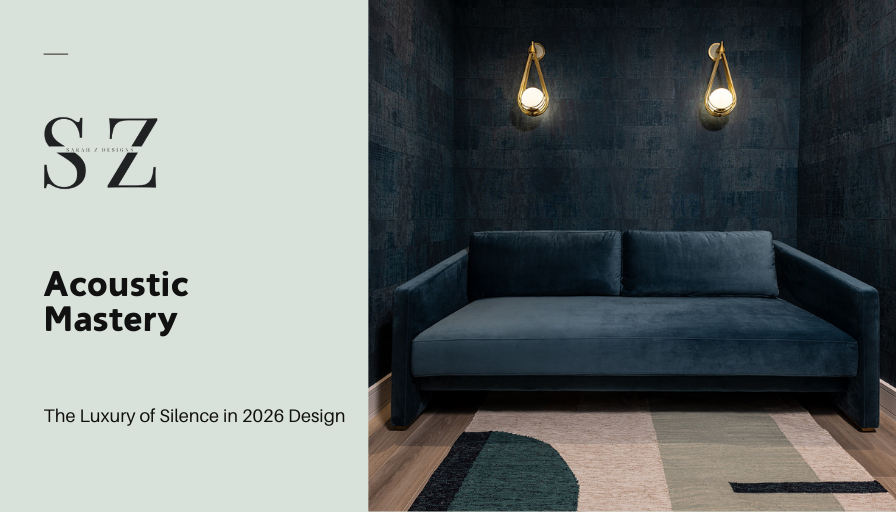
- Textural Depth with Leather: One of my favorite techniques is utilizing upholstered walls. Using premium hides from Edelman Leather, we can create padded wall panels that trap sound waves while adding an undeniable layer of sophistication. The density of the leather combined with the acoustic backing significantly dampens noise.
- Softening Hard Surfaces with Custom Drapery: In Miami Beach condos where floor-to-ceiling glass is standard, we counter reflection by integrating heavy, custom-pleated drapery using wools or velvets. These textiles act as a barrier against city noise while framing your ocean view with elegance.
Technical Specifications: Acoustic Performance Overview
| Material Selection | Aesthetic Impact | Acoustic Metric (Performance) |
| Calacatta Viola Marble | High-contrast, elite luxury | Low NRC (Requires mitigation via rugs) |
| Phillip Jeffries Natural | Organic texture, adds depth | Medium NRC (Diffuses sound effectively) |
| Leather Panel | Rich, tactile opacity | High STC & NRC (Superior absorption) |
| Micro-Perforated Wood | Sleek, modern millwork | High NRC (Hidden sound trapping) |
Frequently Asked Questions (Acoustic Wellness)
- How can I improve acoustics without sacrificing a modern, minimalist look?
I specialize in ‘invisible’ acoustics. We use micro-perforated wood veneers and plaster systems that look like hard, sleek surfaces but actually absorb sound, maintaining your minimalist aesthetic while eliminating echo.
- What is the best flooring for sound reduction in a condo?
While carpet offers the highest silence, we often prefer engineered wood with a high-grade cork underlayment or acoustic rubber matting. This reduces impact noise significantly, meeting the requirements for most Miami high-rises.
- Do upholstered walls really help with noise?
Absolutely. When we use materials like Edelman Leather or heavy wools over an acoustic batting, it prevents sound from bouncing off the walls. This supports the “low-cortisol” environment we promote in our design studies.
- What is the difference between soundproofing and sound treatment?
Soundproofing (STC) is about stopping sound from entering or leaving a room—ideal for bedrooms. Sound treatment (NRC) is about improving the quality of sound inside the room—ideal for living areas and home theaters to prevent echoes.
- Why is “Invisible Tech” important for acoustics?
Standard speakers can create visual clutter and disrupt the flow of a room. By using “Sonance” invisible speakers that are plastered into the ceiling, we achieve high-fidelity soundscapes that support the Digital Sanctuary aesthetic.
- Can poor acoustics affect my health?
Yes. Constant exposure to “echoey” environments or low-frequency hums increases cognitive load and elevates cortisol levels. Acoustic mastery is a form of preventative healthcare, ensuring your nervous system can truly decompress.
The Soul of the Sanctuary
Acoustic mastery is not just about blocking noise; it is about curating the sounds that matter—the laughter of family, the notes of a piano, or the profound peace of a quiet morning. In 2026, the ultimate luxury is the ability to control your sensory environment. Your home should look as serene as it sounds.
Our acoustic luxury interior design Miami studio invites you to experience true silence. To experience the luxury of silence in your own residence, I invite you to contact my studio to schedule a private consultation.