
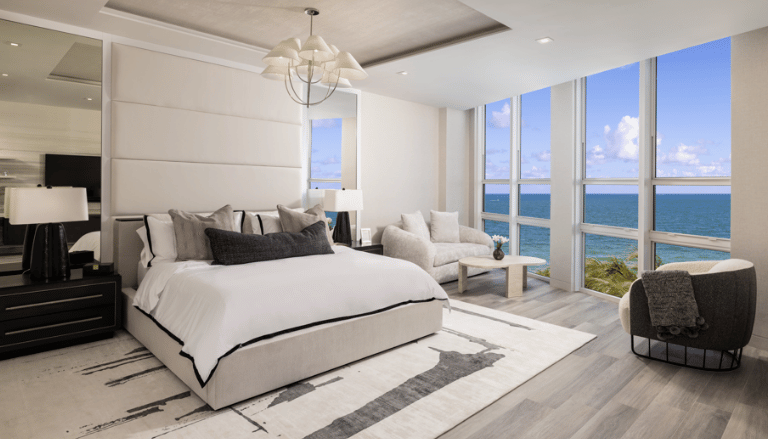
Biophilic Interior Designs Golden Beach: 5 Elements for a Luxury Natural Heaven
Golden Beach is the only place in Miami where a single-family home opens directly onto its own stretch of private sand. One mile of coastline, its own police force, and not a single shop, hotel, or high-rise allowed within town limits. The quiet here is not an amenity. It is the law.
Which changes the design question entirely. In most of Miami, biophilic design works to bring nature indoors. In Golden Beach, nature is already at the door, and it arrives at full volume: blinding east light, salt in the air, the Atlantic filling every window.
The work is not to imitate the ocean. It is to hold your own beside it.
These are the five elements Sarah Z Designs uses to turn a Golden Beach residence into a home that does not compete with the Atlantic, but breathes with it
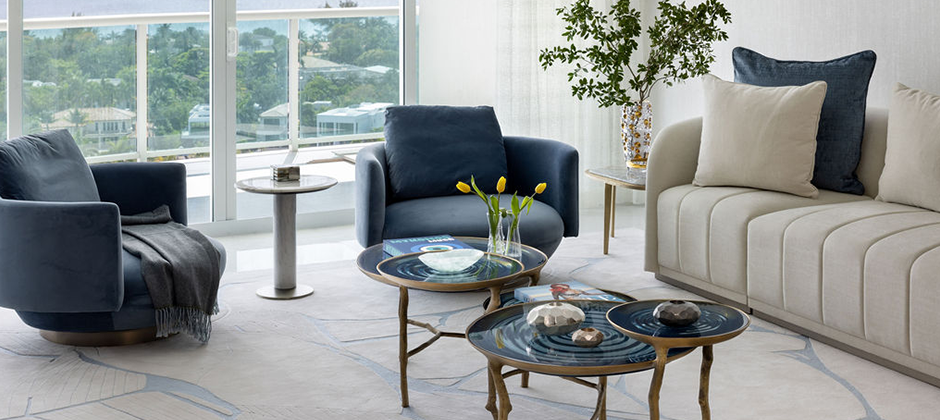
Here are the five elements we use to turn a Golden Beach residence into a seamless natural heaven.
1. The Invisible Threshold (Seamless Flow)
The greatest luxury on this coast is a walk from your living room to the sand without ever quite noticing where the house ends.
We create that sensation by removing every visual full stop. One continuous floor, honed limestone or open-pore travertine, runs from the deepest room in the house straight through to the oceanfront terrace.
The sliding glass walls disappear into pockets. With no change of material and no frame to step over, the mind simply
stops registering a boundary. The living room becomes the first row of the beach.
2. Materials That Age Like the Coast
Salt air is merciless with anything artificial and surprisingly generous with everything natural. That single fact decides most of our material palette. High-gloss lacquer and polished metal fight the environment and lose, usually
within the first year. So we choose materials that get better instead: bleached white oak, lime-washed walls that breathe with the humidity, unlacquered brass and bronze that slowly earn a living patina.
The home stops being an object placed on the sand and starts reading as part of the coastline.
Stone deserves its own decision. Polished marble belongs in a metropolitan penthouse; against the sand it turns slick underfoot and visually cold. Coral stone, shell-flecked limestone, and tumbled travertine do the opposite.
They grip bare feet, stay cool under the Florida sun, and carry the texture of the beach indoors without a hint of theme.
Building on this coastline also means designing within some of the most exacting
codes in the country, reviewed by one of its most protective towns.
Sarah Z Designs merges high-end aesthetics with those coastal regulations from the first drawing, so the vision survives the approval process intact.
Explore our oceanfront interior design services to see how we transform coastal properties into timeless,
biophilic retreats.
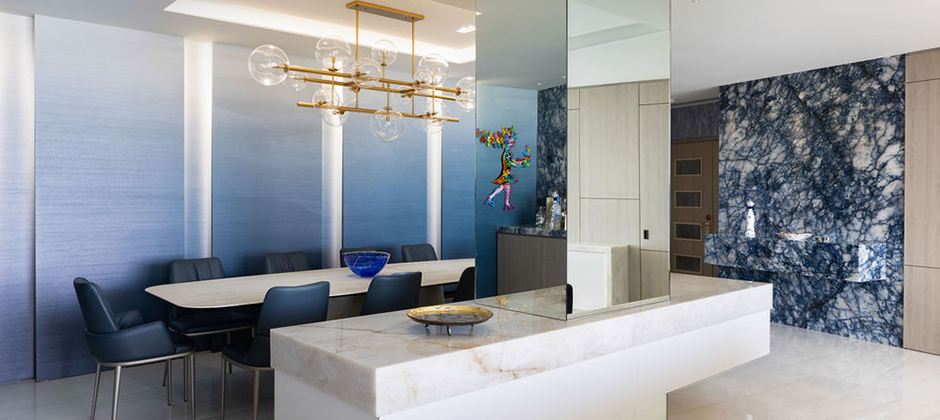
3. Sculpting the Atlantic Light
Golden Beach faces due east, so the sun does not rise here so much as walk straight into the house.
Spectacular at seven in the morning. Blinding by nine.
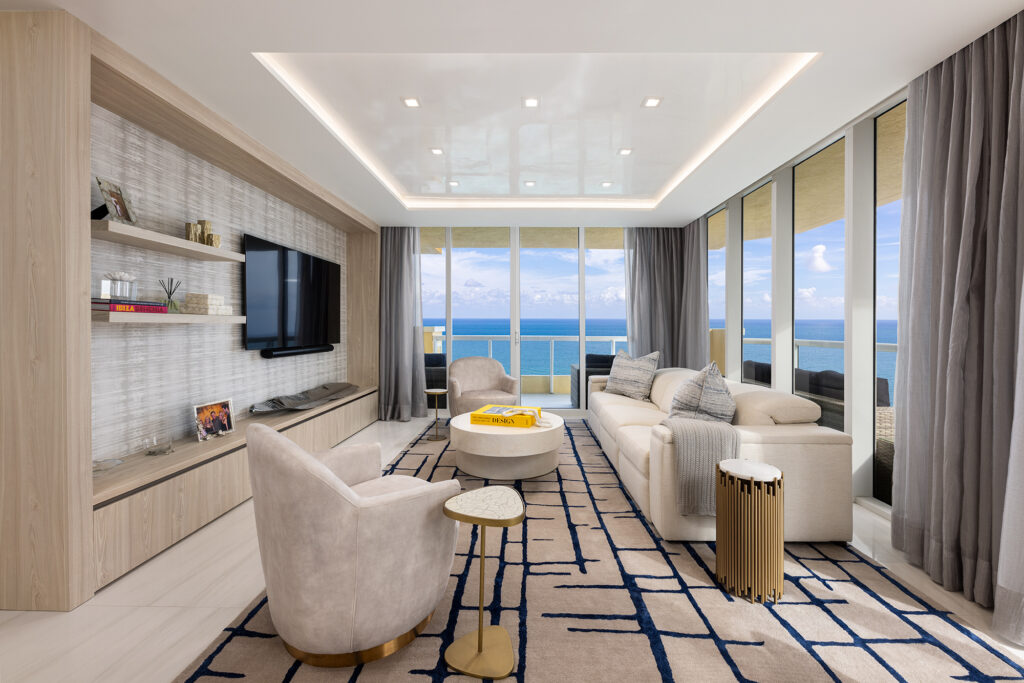
The instinct is to block it. The better answer is to diffuse it. Sheer open-weave linens turn the glare into a glow, while coffered ceilings, slatted wood, and textured plaster absorb what is left.
The result is a light that shifts all day without ever turning harsh, which is the entire point of living on the water.
After sunset, the lighting keeps following the sun. Our circadian systems mirror the Atlantic’s own progression: crisp daylight tones in the morning, deep warm ambers by evening, preparing the body for rest.
The technology is completely invisible and deeply felt, and it is programmed to respect the local coastal lighting
ordinances from day one.
4. The Psychology of “Blue Space”
Neuroscience has a name for what the ocean does to the mind. Researchers call it blue space, and proximity to water measurably lowers stress. But only if the home is arranged to let it work.
So we orient every primary seating and resting area toward the horizon, and then
we manage the part most designs forget: the sound. The Atlantic can roar.
Acoustic planning and heavy natural textiles soften the crash of the waves into a low, restorative murmur, the kind that puts a house to sleep instead of keeping it awake.
And on temperate winter days, we let the ocean in entirely. Long before air conditioning, coastal homes were cooled by cross-ventilation, and we bring that logic back with operable window walls and automated louvers aligned to the
prevailing breeze.
Salt-tinged air moves through the residence naturally, refreshing it room by room and deepening the sensory connection to the sea.
5. The Palette of Sand and Dune
You will find no navy stripes and no anchors in our work. The nautical look is what people do when the ocean is a theme. In Golden Beach, the ocean is the view.
The palette comes straight from the dunes outside the window: chalk, warm oat, weathered driftwood, the muted silver-greens of sea oats and dune sunflowers. We pull those exact hues into the upholstery and custom millwork, so the interior reads as a continuation of the protected ecosystem beyond the glass.
The quiet, low-contrast envelope does one more job. It gives the eye a rest, which
makes the one saturated color in view, the blue of the actual Atlantic, arrive with
even more force. The ocean becomes the artwork. Everything indoors is the frame.
The Architecture of the Coast: Technical Constraints & Regulations
Behind the serenity of a Golden Beach estate sits some rigorous planning. Three constraints shape nearly every project on this sand:
• The Sea Turtle Lighting Ordinance. The town’s strictest design client
weighs about 300 pounds and nests on the beach. To protect sea turtle
hatchlings, ocean-facing glass is typically tinted to a visible light
transmittance of 45 percent or less, and interior lighting near the ocean must
be shielded or automated at night. We design lighting plans that satisfy the
ordinance while keeping evenings indoors warm and intimate.
• High-Velocity Hurricane Zone glazing. Every piece of exterior glass and
framing must meet Miami-Dade’s highest impact standards, and custom
HVHZ windows carry lead times of 12 to 20 weeks. That is why we lock in
sightlines and window expansions during month one of the project, not month
six.
• Marine-grade everything. Exterior-facing hardware is specified in 316L
stainless steel or solid bronze. Anything less begins pitting within the first
year on this coastline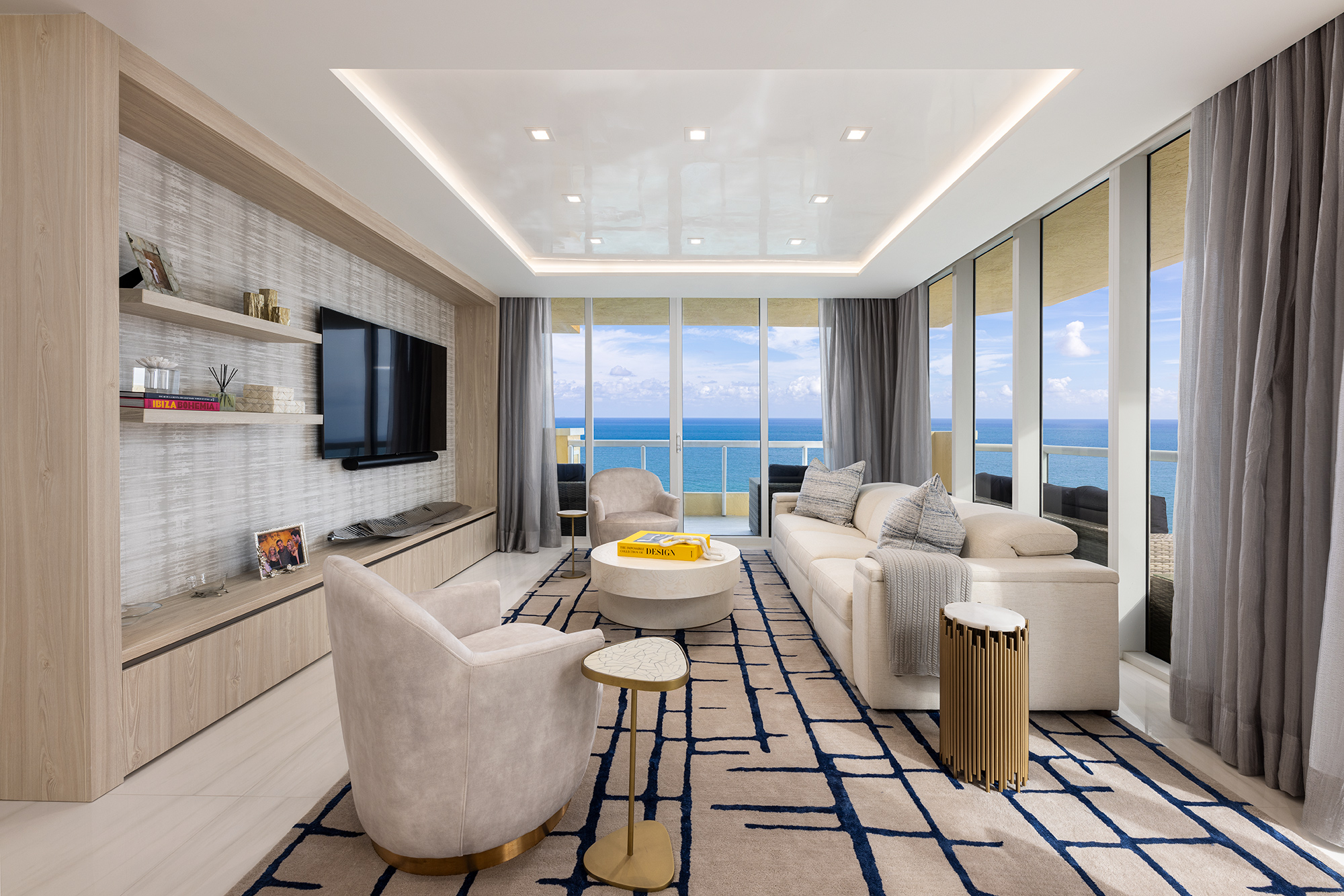
Frequently Asked Questions
Why choose biophilic interior design for an oceanfront home?
Because it aligns the home with the environment instead of fighting it. On the ocean, that means organic materials that tolerate salt air, layouts that maximize the horizon, and lighting that diffuses harsh glare.
The result is a residence that feels like a deeply calming retreat rather than a sealed box with a view.
How does Sarah Z Designs work with the Sea Turtle Ordinance in
Golden Beach?
We integrate the ordinance into the design rather than patching it on later: specialized window tints, automated blackout treatments for evening hours, and warm low-glare lighting under 3000K positioned strategically near coastal-facing windows. The ecosystem stays protected and the evenings indoors stay beautiful.
What is the best flooring for a home on the sand?
Honed natural stone such as limestone or coral stone, or wide-plank matte oak.
These surfaces forgive tracked-in sand, provide natural slip resistance, and can run level from the interior straight out to the loggias for a seamless threshold.
How do you protect luxury furniture from coastal humidity?
By specifying correctly from the start: performance linens, outdoor-rated but indoor-soft bouclés, breathable lime plasters, and kiln-dried solid woods. We also work with HVAC engineers to keep indoor relative humidity strictly between 45 and 55 percent.
How does biophilic design use natural cross-ventilation in
oceanfront estates?
By aligning operable glass walls and louvered panels with the prevailing ocean breeze. On temperate days the home cools itself, indoor air refreshes continuously, and the connection to the sea becomes something you feel on your
skin, not just see through glass.
How does Sarah Z Designs handle architectural board approvals
in Golden Beach?
Golden Beach maintains a rigorous review process for single-family estates. We prepare comprehensive interior architectural plans that comply with setback rules, height restrictions, and environmental guidelines from the first submission,which expedites municipal approval and prevents costly delays duringconstruction
How does Sarah Z Designs handle architectural board approvals in Golden Beach?
Golden Beach has a rigorous architectural review process for single-family estates. Sarah Z Designs prepares comprehensive architectural interior plans that comply with local setback rules, height restrictions, and historic environmental guidelines, expediting municipal approvals and preventing costly delays during construction.
How do light-diffusing textiles enhance energy efficiency in coastal homes?
Open-weave natural linens and automated sheer draperies soften intense Atlantic sunlight, reducing solar heat gain without blocking ocean views. This keeps interior living spaces cooler, lowers HVAC loads, and protects art and furnishings from UV damage.
Crafting a home that stands up to the ocean and still reads as ultra-luxury is an intricate art. Sarah Z Designs curates bespoke salt-resistant furnishings, designs custom millwork, and executes full-scale renovations tailored specifically to
oceanfront estates.
Discover how our luxury interior design portfolio brings biophilic design to life across South Florida


Pingback: Why Biophilic Luxury Design Is Redefining Miami Homes