
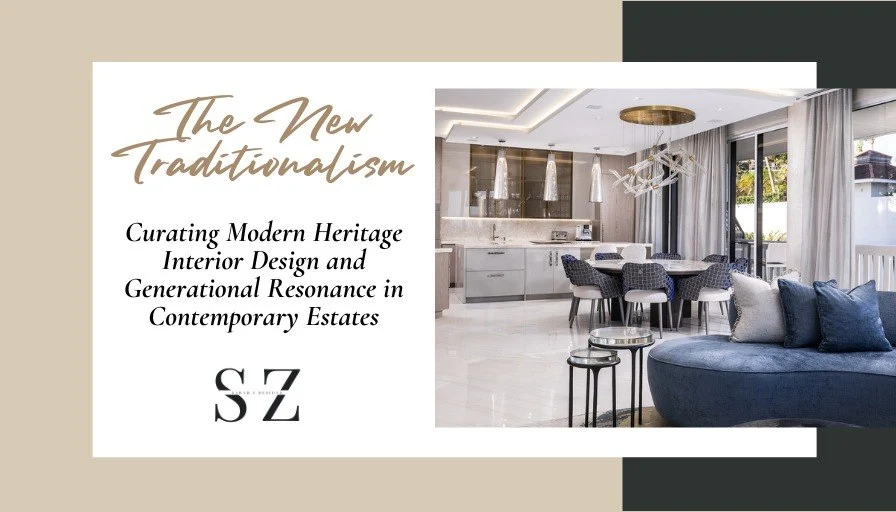
The New Traditionalism: Curating Modern Heritage Interior Design and Generational Resonance in Contemporary Estates
The world of high-end real estate is undergoing a profound and deeply fascinating metamorphosis. We are currently witnessing a definitive rebellion against the sterile minimalism and the cookie-cutter, artificially staged aesthetic that dominated the previous decade of luxury living. In today’s highly discerning market, true luxury is defined by profound identity, compelling storytelling, and an undeniable curatorial depth.
At the very forefront of this stylistic evolution is Modern Heritage interior design, a design philosophy that passionately embraces the romantic soul of the past while meticulously maintaining the spatial fluidity and functionality demanded by contemporary lifestyles. It is not merely a backward glance at antiquity; rather, it is a sophisticated, ongoing dialogue between historical resonance and ultra-refined modernity, resulting in environments that are both breathtakingly beautiful and deeply personal.
For the acclaimed studio Sarah Z Designs, navigating this significant aesthetic shift requires a masterful understanding of both structural architecture and emotional narrative. The primary objective is to craft bespoke spaces that feel inherently collected over generations rather than hastily purchased in a single afternoon from a showroom floor. By strategically anchoring a room with exquisite pieces that possess intrinsic pedigree and seamlessly marrying them with sleek, forward-thinking architectural finishes, the home gracefully transforms into a living, breathing testament to its inhabitants’ unique legacy and refined taste.
The Neuro-Aesthetics of Nostalgia: Emotional Anchoring in the Home
Beyond mere visual appeal and superficial aesthetics, the thoughtful integration of historical elements serves a deeply psychological and grounding function. Environments that successfully incorporate rich history, familiar silhouettes, and tactile textures create a powerful subconscious anchor for the human mind, effectively lowering daily anxiety and fostering a profound sense of continuity and belonging. In an increasingly digitized, transient, and fast-paced world, the primary residence must act as an impenetrable emotional sanctuary, offering a reassuring embrace of permanence and stability.
This intricate psychological framework is directly translated into physical spaces through the deliberate and careful use of ancestral threads. Whether integrating cherished family heirlooms, curating museum-quality vintage art, or repurposing magnificent architectural salvage, these historical elements weave an invisible tapestry of profound comfort. The resulting interior environment feels deeply lived-in, inherently safe, and emotionally resonant. It beautifully bridges the invisible gap between generations, allowing contemporary families to inhabit magnificent spaces that are steeped in historical meaning and irreplaceable tactile memory.
The Architecture of Memory: Preserving Family Lineage
Incorporating Multi-Generational Antiques and Heirlooms
A foundational tenet of modern heritage interior design is the seamless incorporation of meaningful family pieces into clean-lined modern backdrops. When an antique French fauteuil chair or a hand-carved mahogany writing desk is integrated into a modern high-rise living area, it ceases to be a relic of the past; instead, it becomes a conversational bridge. This approach honors personal history while establishing a distinct aesthetic vocabulary that cannot be replicated by off-the-shelf catalog furnishing.
Custom Millwork as a Frame for Vintage Art Collections
To give historical elements the prominence they deserve, contemporary millwork must be custom-tailored to frame the collection. Linear, integrated LED lighting can be embedded into floor-to-ceiling walnut display shelving to illuminate ancestral porcelain, vintage sculpture, or oil portraits. By using crisp, modern framing techniques, the older pieces are elevated, shedding any sense of datedness and instead projecting a museum-quality allure that fits perfectly within a 2026 luxury estate.
The Art of the Juxtaposition: Balancing Antiquity with Clean Lines
The ultimate success of the Modern Heritage movement relies entirely on masterful spatial framing and the highly delicate art of juxtaposition. Imagine meticulously pairing a highly ornate, eighteenth-century European commode or a beautifully oxidized, heavy antique mirror with ultra-sleek, minimalist Italian millwork and monolithic stone slabs. This intentional tension between the ornately traditional and the starkly austere creates a breathtaking dynamic energy that mutually elevates both stylistic elements.
To witness stunning examples of this incredibly delicate balance, discerning clients can explore our meticulously curated Miami interior design portfolio, where profound historical gravitas seamlessly meets masterful contemporary restraint.
Immaculate proportion and uncompromising restraint are the foundational guiding principles of this sophisticated methodology. Heavy historical pieces must never be allowed to overcrowd the room or dominate the visual hierarchy; instead, they should gracefully act as singular sculptural focal points within a bright, open-concept layout. By strategically allowing ample negative space to surround a beautifully carved antique console or a dramatic, cascading vintage chandelier, the object is rightfully elevated to the prestigious status of fine art, celebrated independently rather than becoming lost in a chaotic sea of unnecessary clutter.
Proportional Balance: Engineering the Visual Threshold
The Principle of Negative Space around Heavy Furnishings
When working with imposing historical items, such as a hand-carved Gothic armoire or an oversized Baroque console table, the surrounding layout must be strictly polished and unencumbered. Leaving significant breathing room—or negative space—around the piece ensures it does not overwhelm the room’s proportions. This isolation commands the eye’s respect, transforming a potentially heavy, dated piece of furniture into an imposing architectural sculpture.
Merging Monolithic Contemporary Materials with Intricate Patinas
The true genius of modern heritage interior design lies in contrasting the smooth, unblemished finishes of modern luxury with the rich, weathered patinas of antiquity. Placing a raw, heavily grained antique oak dining surface atop a minimalist, polished stainless steel or glass structural base creates an exquisite visual dichotomy. The sleekness of the modern element accents the historical depth of the older material, proving that opposing textures can coexist in complete aesthetic harmony.
The Return of Chromatic Depth: Moody Palettes and Rich Timber
The definitive transition towards heritage aesthetics also heralds a dramatic and welcome shift in interior color palettes. We are joyfully introducing deep, incredibly atmospheric jewel tones such as rich plum, midnight burgundy, and dark jade to create intimately scaled, high-contrast sanctuaries within the larger estate. These profoundly richer hues are particularly effective and transformative in private libraries, formal dining rooms, and hidden speakeasy bars, where the primary objective is to completely envelop the occupant in an atmosphere of enveloping warmth and unmatched sophistication.
To fully comprehend this significant palette shift, consider the following textural and chromatic pairings that beautifully define this new era of traditionalism.
The Material & Chromatic Palette Matrix
SPATIAL APPLICATION | DOMINANT CHROMATIC HUEM | MATERIAL PAIRING |
Private Libraries & Studies | Midnight Burgundy | Open-pore mahogany and aged brass hardware |
Formal Dining Rooms | Deep Jade Green | Dark European walnut and faceted crystal lighting |
Hidden Bars & Lounges | Atmospheric Plum | Unpolished burl wood and crushed silk velvet |
This striking chromatic depth is further enhanced and grounded by proudly trading out the bleached, monochromatic blonde woods of the past decade for the rich, time-honored textures of dark walnut, open-pore mahogany, and dramatically veined, unpolished burl wood. These magnificent organic materials bring an inherent, undeniable warmth and a level of tactile luxury to the space, firmly grounding the lighter, modern architectural elements with a profound sense of historical permanence and visual gravity.
The Renaissance of Saturation: Designing the Moody Sanctuary
The Psychological Comfort of Enveloping Jewel Tones
Unlike bright, high-reflective whites that stimulate alertness, deeply saturated jewel tones absorb light, drawing the walls inward to create a protective, womb-like environment. In spaces intended for deep contemplation, quiet conversation, or late-night unwinding, these atmospheric colors soothe the nervous system. The mind associates deep, historic tones with privacy and security, allowing for genuine relaxation away from public spaces.
Choosing the Correct Undertones for Historical Dark Woods
When designing around rich timbers like open-pore mahogany or unpolished burl wood, selecting the correct wall undertones is critical. To prevent the room from feeling muddy or overly dark, deep paint colors should feature complex, luminous undertones—such as a burgundy with an underlying violet base or a jade with a cool emerald undertone. This ensures that when natural light rakes across the walls, the color exhibits an active depth that brings out the grain of the historic timbers.
Dressmaker Details Re-Engineered: The Haptic Narrative
Another defining hallmark of the Modern Heritage movement is the enthusiastic revival of classic, traditional design signatures, which are now being thoughtfully adapted and refined for the twenty-first century. We are witnessing the highly anticipated return of beautifully skirted sofas, intricate decorative piping, elaborate fringing, and highly detailed, micro-scale floral tapestries. However, these romantic traditional dressmaker details are expertly re-engineered to suit the exacting, uncompromising standards of modern luxury, thereby creating a compelling, multi-layered haptic narrative that fully engages the physical senses.
Crucially, this romantic aesthetic revival does not demand the sacrifice of modern durability or practical convenience. The luxury textile industry has successfully perfected the complex art of performance fusion, masterfully merging these incredibly traditional dressmaker details with high-performance, stain-resistant acrylic fabrics. This technological advancement ensures that the highly tailored, opulently layered look is entirely practical for the rigorous, daily demands of South Florida’s coveted indoor-outdoor lifestyle, offering unparalleled visual beauty without the heavy burden of material fragility.
Curation of the Soft Envelope: High-Performance Haberdashery
Tailored Pleating and Skirting in Open-Concept Layouts
In large, open-concept floor plans, linear modern furniture can sometimes feel cold or overly rigid. Introducing re-engineered traditional soft details, such as a clean box-pleated skirt on a structured sofa or subtle contrast piping along a lounge chair, softens the room’s geometry. These micro-details add layers of sophisticated craftsmanship, instantly telling the observer that every single textile has been meticulously detailed by hand.
Integrating Intricate Fringing and Bullion Trim Without Excess
Fringing and heavy bullion trims are making a powerful comeback, but their modern application requires a disciplined touch. Rather than layering trim onto every drapery panel and throw pillow, today’s look applies these details to singular, statement items—such as the base of a tailored chaise lounge or the edge of a custom velvet ottoman. This disciplined application celebrates the craftsmanship of classical trimmings while maintaining a clean, uncluttered architectural horizon line.
From High-Rise to Heritage: Adapting the Trend to Miami Architecture
The vibrant region of South Florida presents a distinctly unique set of architectural variables and climatic challenges. Overcoming the inherent difficulties of incorporating heavy, historic, or highly traditional elements into the sleek, ultra-modern glass-and-steel high-rises of Sunny Isles, Brickell, or Bal Harbour requires an exceptionally strategic and nuanced design approach. The delicate coastal balance must be meticulously maintained at all times to ensure the interior spaces do not feel jarringly disconnected from the breathtaking, expansive oceanic panoramas located just outside the floor-to-ceiling windows.
The brilliant solution lies in masterfully softening the intense, direct coastal sunlight and the sometimes clinical nature of structural glass walls through the strategic introduction of highly textured Belgian linens, porous raw travertines, and selectively curated European antiques. These beautifully organic and deeply historical elements serve to firmly ground the ethereal, floating-in-the-sky feeling of ultra-luxury condominiums, successfully injecting genuine historical soul into stark contemporary shells.
You can view numerous successful, breathtaking applications of this exact methodology in our extensive luxury design portfolio, brilliantly showcasing the seamless fusion of sky-high modernism and profound heritage grounding.
Elevating the Tower: Grounding High-Altitude Luxury
Balancing the Intense South Florida Sunlight with Antiqued Finishes
The unfiltered sunlight streaming through high-rise windows can easily wash out flat, untextured contemporary paint finishes and high-gloss synthetics. Modern heritage interior design combats this by introducing matte mineral plasters and wire-brushed antiques that capture and scatter the harsh light. The textured, historic surfaces absorb the bright glare, softening the rays into an inviting, amber-infused glow that warms the entire interior layout.
Creating Fluidity Between Tropical Views and Historical Shells
To ensure a harmonious flow between a modern Miami balcony view and a heritage-infused interior, the color and texture transitions must remain soft. For example, selecting light, open-pored unfilled travertine flooring that extends toward the glass exterior frame allows for material continuity, while a curated antique walnut armoire inside provides the necessary visual weight. This ensures the residence feels like an authentic, permanent home anchored to the earth, rather than a transient glass box suspended in mid-air.
Market Pedigree: The Value of the Curated Estate
From a strictly financial and real estate investment perspective, the definitive aesthetic pivot towards Modern Heritage is proving to be highly strategic and remarkably lucrative. The investment narrative is absolutely clear: generic, staging-like interiors that lack personality are rapidly losing their perceived value in the competitive secondary luxury market. Discerning, ultra-high-net-worth buyers are simply no longer impressed or motivated by sterile, impersonal spaces that lack a distinct, compelling point of view or architectural pedigree.
Conversely, completely custom-curated legacy estates that proudly boast a distinct historical soul, a clear and engaging architectural narrative, and an authentic, high-quality integration of heritage elements are consistently commanding the absolute highest real estate appraisals. These exceptional properties offer prospective buyers something that cannot be easily replicated or quickly manufactured: a genuine sense of deep history, heavily curated sophistication, and an enduring multi-generational resonance that truly feels priceless.
The Longevity Dividend: Appraising the Soulful Home
The Shift from Depreciating Staged Decor to Appreciating Antiques
Standard contemporary furnishings often depreciate the moment they leave the showroom floor. Fine antiques, documented mid-century collectibles, and verified historical artifacts hold their intrinsic value or appreciate over time. By building a residential interior around authenticated heritage elements, homeowners convert their design budgets into an investment portfolio of tangible, collectible assets that elevate the overall provenance of the entire estate.
Attracting the Discerning Secondary Buyer via Curatorial Excellence
When an estate enters the secondary luxury market, properties featuring curated architectural integrity stand out. High-net-worth buyers effortlessly recognize the difference between a house decorated with mass-produced contemporary items and an estate engineered with custom historical narratives. A home boasting an authentic soul, tailored millwork, and refined structural details commands a notable premium, reducing market time and delivering an exceptional return on design investment.
Frequently Asked Questions
- What defines Modern Heritage in contemporary interior design? Modern Heritage interior design is a highly sophisticated aesthetic movement that masterfully blends historical, ancestral elements such as fine antiques and cherished heirlooms with sleek, minimalist modern architectural lines, thereby creating a living space that feels both wonderfully timeless and fluidly contemporary.
- How do you prevent historical pieces from making a room feel cluttered? The critical key to success is spatial framing and uncompromising visual restraint. By treating historical pieces as standalone sculptural focal points and generously surrounding them with ample negative space and minimalist modern millwork, the room remains incredibly airy, light, and sophisticated rather than feeling dark or overcrowded.
- How does Sarah Z Designs adapt traditional elements for luxury Miami high-rises? Sarah Z Designs masterfully adapts heavy traditional elements by carefully balancing them with the surrounding coastal environment. We utilize textured linens, organic raw travertines, and highly curated, lighter-toned antiques to beautifully soften the intense natural sunlight and effectively ground the contemporary glass-and-steel architecture typical of elite Miami high-rises.
- What specific color palettes are associated with the New Traditionalism? This design movement heavily favors a bold return to chromatic depth, purposefully utilizing atmospheric jewel tones such as midnight burgundy, deep jade green, and rich plum. These captivating colors are seamlessly paired with rich, dark woods like European walnut and open-pore mahogany to create incredibly intimate, luxurious private sanctuaries.
- Can traditional dressmaker details be practical for everyday modern living? Absolutely. By brilliantly merging classic visual details like decorative piping, intricate fringing, and elegantly skirted sofas with modern, high-performance, stain-resistant synthetic fabrics, we guarantee the resulting design is both exceptionally elegant to look at and entirely practical for the rigorous demands of everyday family use.
- How do I start blending my family heirlooms with a pre-existing modern interior? Begin by practicing strict editing. Choose one or two high-value ancestral pieces—such as an intricately carved wood chest or a vintage gilt mirror—to serve as the main anchors in a room. Surround them with clean, minimalist furnishings and single-toned walls to let the history of your heirlooms take center stage without competing with busy patterns.
- Are dark historic timbers like walnut and mahogany appropriate for tropical climates? Yes, when perfectly balanced with light, breathable materials. In South Florida, dark woods look exceptionally handsome when paired with textured white plaster walls, raw travertine, and light Belgian linens. This high-contrast mix prevents the wood from looking overly heavy, creating a refined tropical estate feel.
- What type of lighting works best to illuminate a modern heritage space? A layered lighting plan is essential. We recommend pairing architectural, low-glare LED recessed fixtures to subtly highlight walls and paths, combined with historical statement luminaires—such as an authentic vintage brass sconce or a restored crystal chandelier. This ensures the space benefits from 2026 technological convenience while retaining its old-world atmosphere.
- How do you verify the authenticity and scale of an antique before purchasing? We collaborate with verified global networks of reputable antiquarians and art historians to ensure every artifact possesses authenticated provenance. Additionally, our studio utilizes advanced digital 3D spatial modeling to verify that the item’s historical proportions will integrate seamlessly into the modern home’s layout before procurement.
- Can mineral and lime-wash plasters be used in high-humidity coastal zones? Absolutely. High-end, authentic Italian lime plasters are naturally breathable, resistant to mold, and highly durable in humid coastal environments. Unlike standard synthetic acrylic paints, mineral plasters allow moisture to escape naturally, maintaining pristine air quality and delivering a velvety, matte finish that diffuses sunlight beautifully.
The Lasting Legacy of Curatorial Design
The profound evolution from stark, impersonal minimalism to the incredibly rich, narrative-driven world of Modern Heritage signifies a major maturation in the global luxury real estate market. It actively acknowledges that true opulence is not merely about the complete absence of physical clutter, but rather the deliberate, highly mindful curation of meaningful pieces that tell a compelling human story. By expertly weaving the emotional resonance and romanticism of the past into the sleek, high-tech functionality of the present day, discerning homeowners can cultivate an extraordinary environment that completely transcends fleeting design trends, establishing a profound, unshakeable sense of generational continuity and deep psychological comfort within their private residential sanctuaries.
Ultimately, curating a true legacy estate is an incredibly deeply personal endeavor that absolutely demands both high-level curatorial expertise and bold, visionary architectural insight. We passionately invite our discerning clients to blend their unique personal histories with our highly acclaimed, signature luxury design framework, thereby transforming standard premium properties into truly enduring, multi-generational masterpieces.
To begin the incredibly rewarding journey of crafting your own bespoke Modern Heritage sanctuary, we warmly encourage you to contact Sarah Z Designs today by visiting our Sarah Z Designs Contact Page and deeply discover the unparalleled, lasting value of a truly curated, heritage-infused luxury home.


